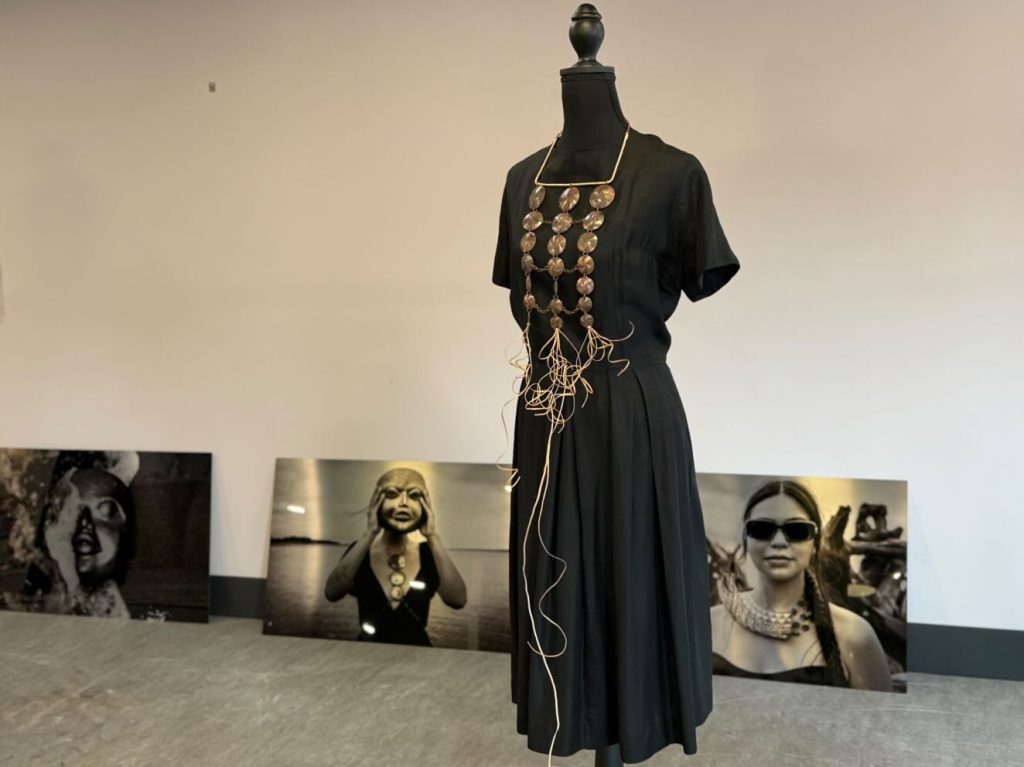


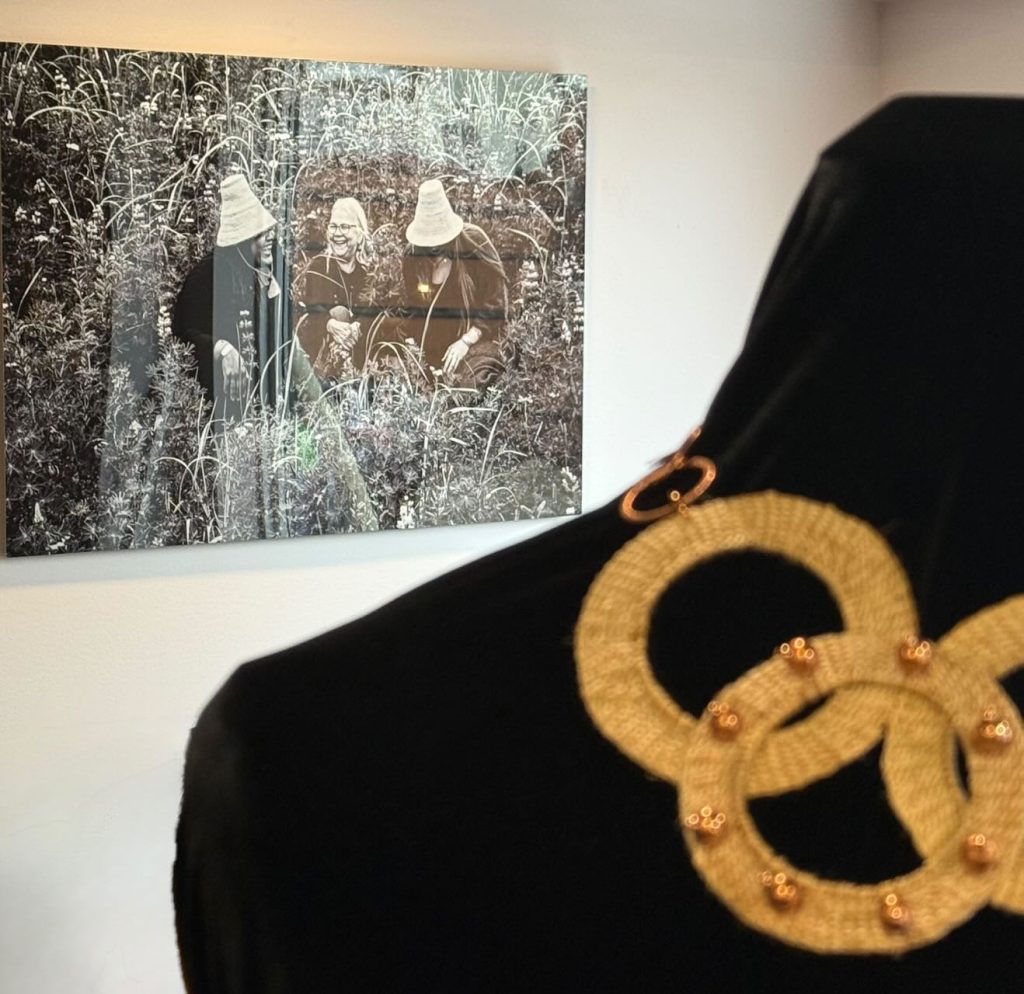



For 30 years, Jennie Wheeler has been weaving. In her home village of Yakutat, a Southeast Alaska community of around 600 people, she has worked with seal skin, sea otter, deer, and moose hide, furs, beads, spruce roots, and grass to create regalia for ceremonial potlatches and dance, and to quietly, persistently hold her community together through art. This June, her work and the work of those she has taught take center stage at T&H Áan Hít in Juneau, in a landmark exhibition called Intertwined: Returning to Our Roots.
Among the students Jennie has guided is her own daughter, Jennifer Younger, a Tlingit artist and designer who curated this exhibition. That thread running from mother to daughter to the wider circle of students gives Intertwined its emotional core: this is not just an art show, but a portrait of how culture survives, one pair of hands teaching another.
“In order to sew seal skin moccasins, I need someone from our village to hunt the seal. Hunting seal and other animals alone is a big part of our way of life. Respect and thankfulness is part of the hunting process, and I believe it is just as vital that we pass on our way of thinking as well as our way of life.”
– Jennie Wheeler
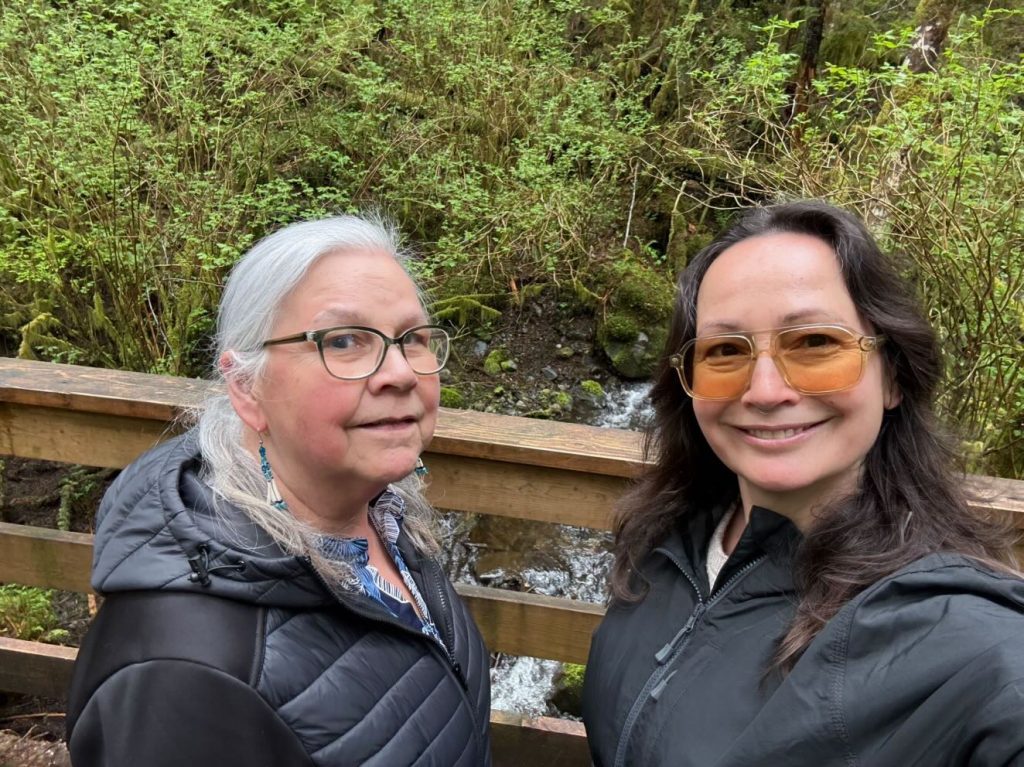
Jennie’s philosophy is rooted in a Tlingit truth she returns to again and again: there is no separation between art and living. Making regalia, weaving baskets, processing hide; these are not crafts set apart from daily life but the very texture of it. She has spent decades mixing traditional methods with contemporary projects, from ceremonial regalia to cell phone cases and purses, always to keep young people connected and engaged.
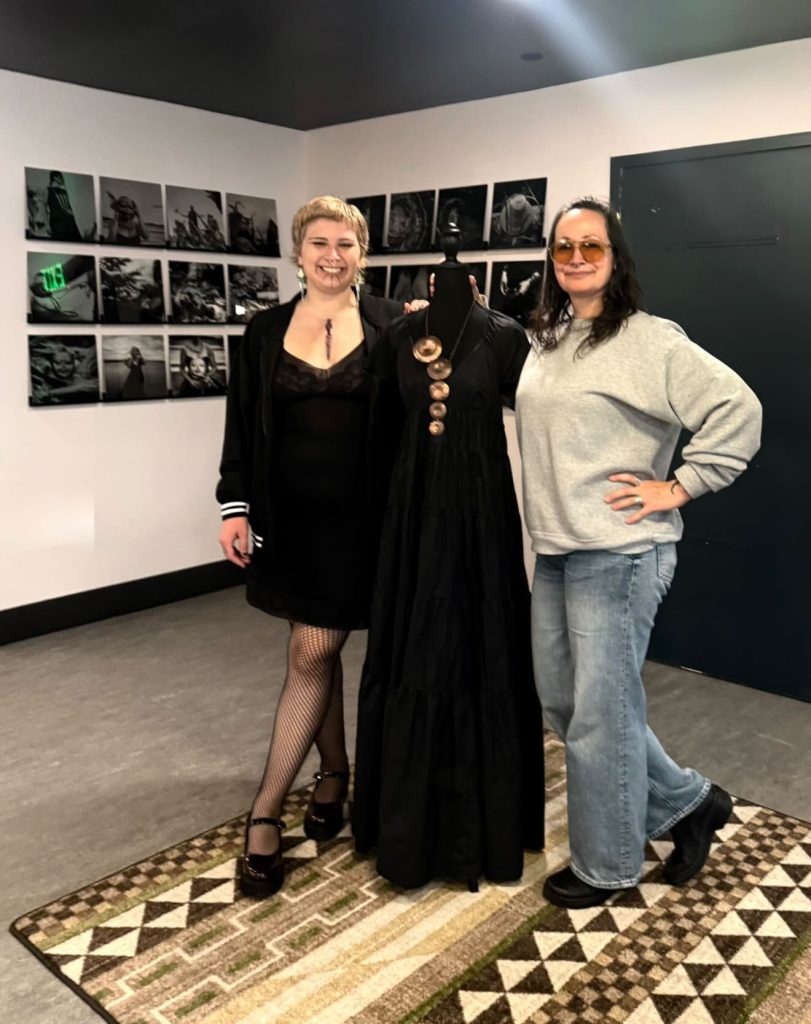
The exhibition brings together Jennie’s work alongside pieces by the students who have learned from her: Naawéiyaa, Rochelle Smallwood, Karrina Bell, Janie Jensen, and Joshua James, as well as Jennifer Younger herself. Through woven baskets, wearable art, and contemporary interpretations of traditional techniques, each artist brings their own voice to a shared heritage.
Photography by Rochelle Smallwood, who assisted Jennifer throughout the curatorial process and whose images are featured throughout the exhibition, was shot in Yakutat itself. The model is Zia Noisecat, sister of artist Julian Noisecat, and the shoot came together with the kind of organic, unplanned beauty that feels fated. “It came together so randomly and beautifully,” Jennifer has said, “and we just knew we wanted to save it for something special like this.”
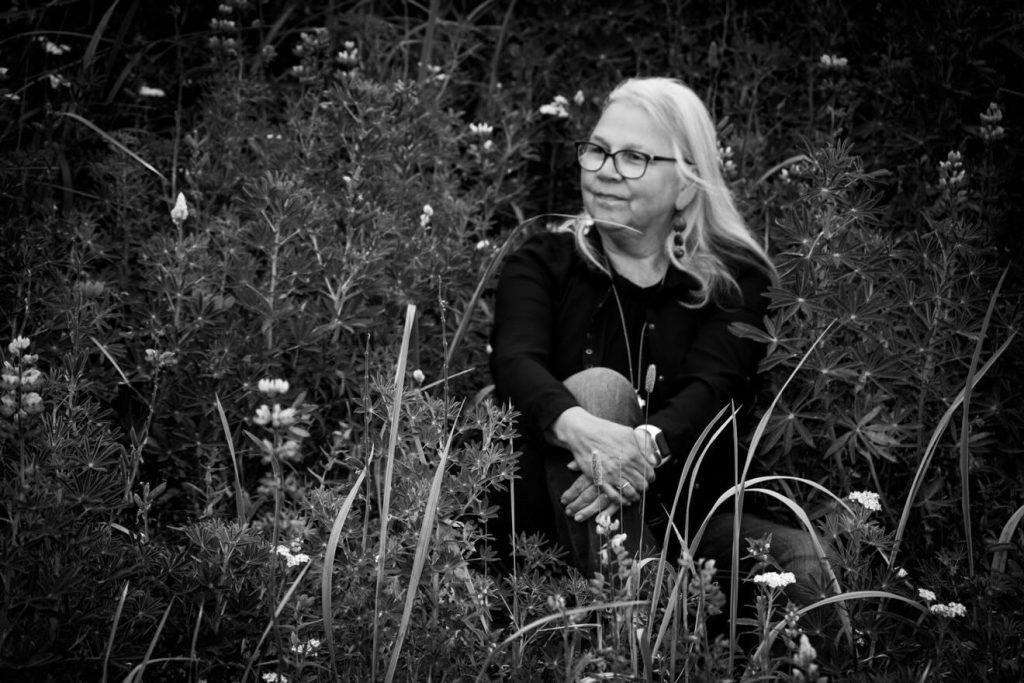
Exhibition artists
Jennie Wheeler — Master weaver
Her students:
- -Naawéiyaa
- -Rochelle Smallwood— photography
- -Karrina Bell
- -Janie Jensen
- -Joshua James
- -Jennifer Younger— curator
The exhibition is presented with in-kind support from the Central Council of the Tlingit & Haida Indian Tribes of Alaska, with staff support from Carley Jackson. Funding comes through the Ursa Major Fund, administered by Bunnell Street Arts Center and supported by The Andy Warhol Foundation for the Visual Arts — a grant dedicated to fostering artist-led, risk-taking, public-facing work across Alaska’s cultural ecosystem.
Intertwined: Returning to Our Roots opens June 5, 2026, and runs through September 2026 at T&H Áan Hít in Juneau, Alaska.