
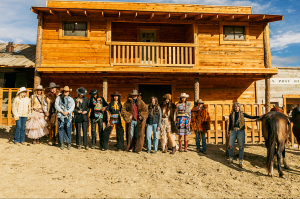
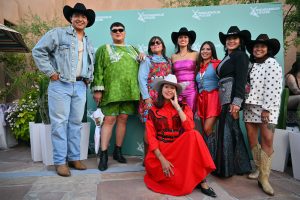

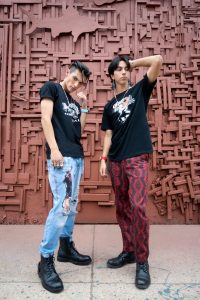
Sovereignty doesn’t always show up as a statement. Sometimes it shows up as a monogrammed ovoid, a dragonfly built from crystal and bear grass, or a horse stolen right back. We asked three Native American designers, all featured in Native Max, what self-determination looks like in their actual work. Here’s what they told us.
Jeremy Arviso, Original Landlords
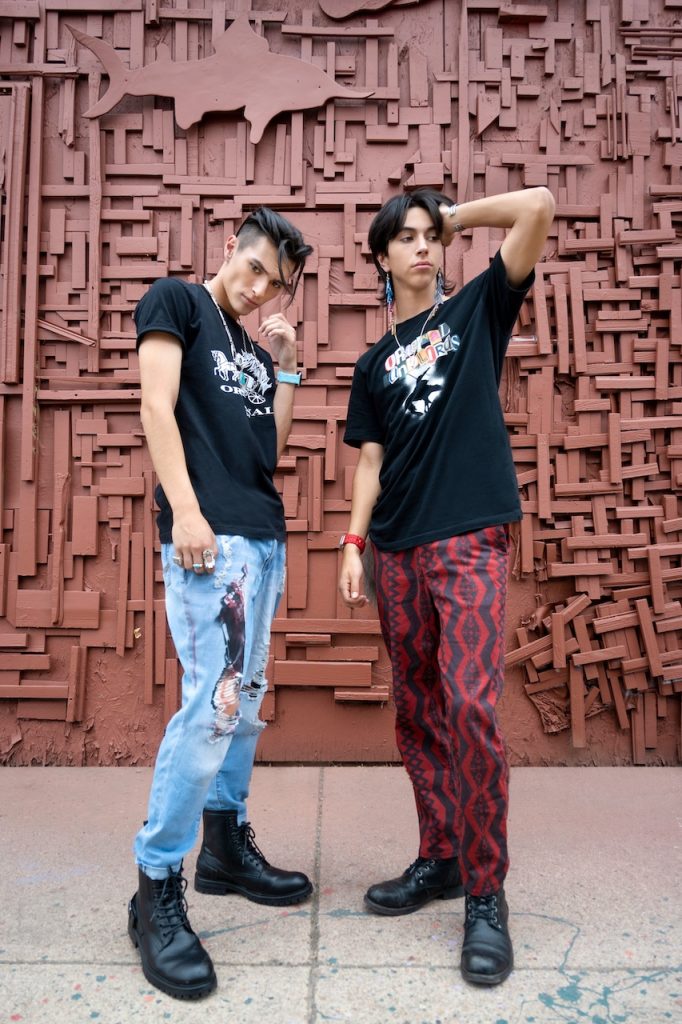
Jeremy’s “Boosting Ralph” graphic pulls straight from 1990s boosting culture, when crews in New York would lift Ralph Lauren from department stores and turn it into a symbol of style and status back in their own neighborhoods. His version takes that same energy somewhere else entirely.

“My interpretation is an homage to that era, but with a different twist,” he told us. “Instead of boosting the clothing, I’m stealing the horse itself. Much like our ancestors once did, I’m taking my own piece of the American Dream and riding off into the sunset with it.”
He’s quick to say sovereignty isn’t the plan going in, it’s what’s left over. “Every piece I create comes from a place of reappropriating what’s been taken,” he said, pointing to how he flips high fashion logos and sports team branding into his own work. And he’s not interested in making it easy to wear. Production runs are limited on purpose. “With Original Landlords, I’m making a statement you can wear,” he said. “Saying something when you enter a room without speaking.”
Shoshoni Hostler, Nar Rew Ekar
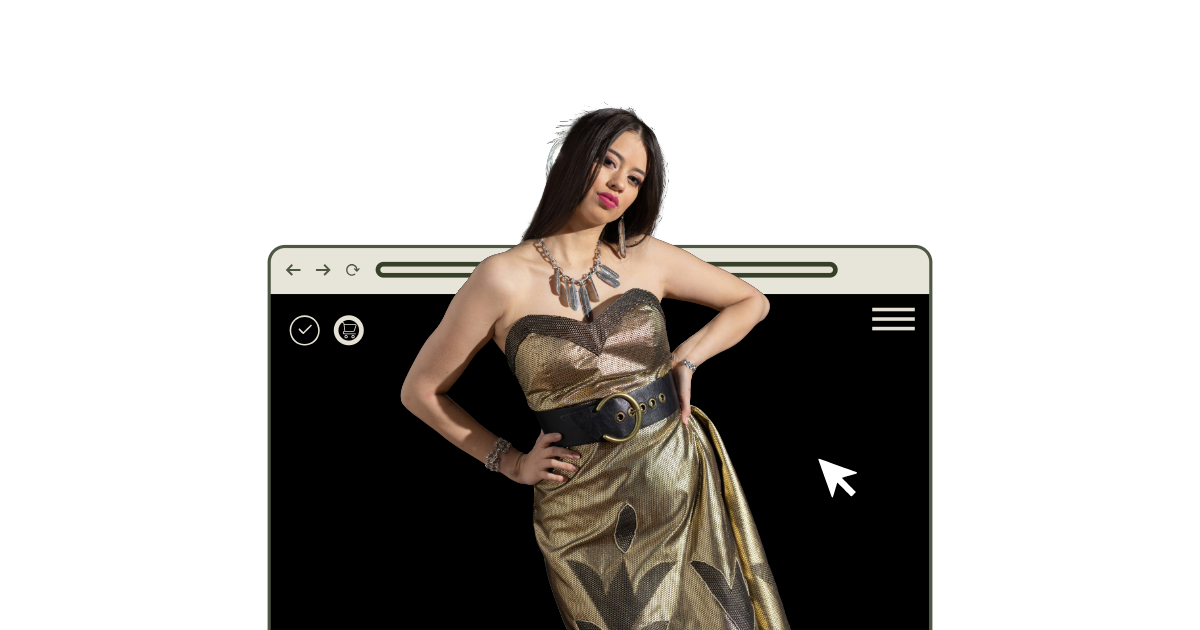
Shoshoni’s beadwork has landed on red carpets that weren’t exactly built with Yurok design in mind, and she treats that as an opening rather than an obstacle. “I get to rise to the challenge of elevating the red carpet beyond what the preconceived expectation is, into something of true beauty and power,” she told us, “building a feeling of connection to land in a way the red carpet has never experienced before.”
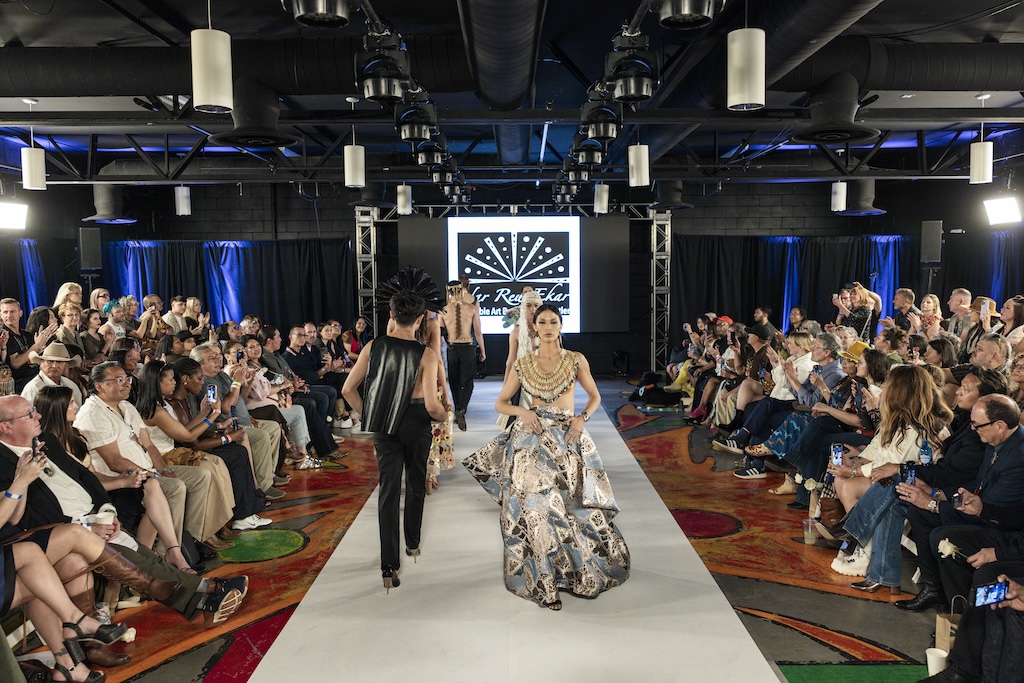
One of her standout pieces, a dragonfly trio built from crystals, painted dentalium, and braided bear grass, was her way of reimagining Indigenous futures through the same materials her ancestors used to read the land. Her process leans on traditional tying and construction techniques, just reworked for contemporary adornment. “I want people to feel proud,” she said, “while showing something the world has never seen before.”
Jennifer Younger, Jennifer Younger Designs
Jennifer works in a visual language, formline, that comes with rules passed down for generations, and she’s spent her career figuring out how to carry it into something people put on every day. “Our culture isn’t something that belongs only in museums or ceremonial spaces,” she explained. “It belongs in everyday life.”
Her Monogrammed Ovoids are the clearest example. The ovoid is one of the foundational shapes in Tlingit formline design, and instead of keeping it inside traditional compositions, she reimagines it as a modern monogram. “That’s formline on my own terms,” she said. “I’m honoring the principles and teachings behind the design while creating something that feels current and wearable.”
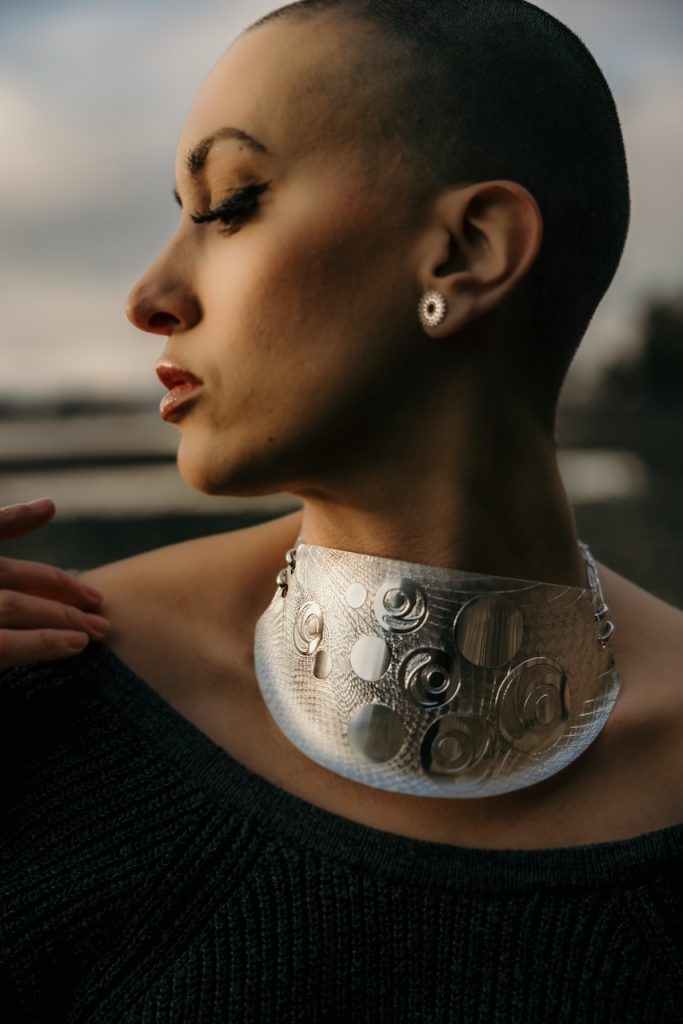
Her piece “Water is Life” carries the same philosophy into a different material. “It honors the life that water provides while reminding us that protecting it means protecting future generations,” she said. “It’s deeply personal because those waters are part of who I am.”
Three designers, three completely different mediums, and the same throughline: sovereignty isn’t a slogan here, it’s a design decision. As America marks 250 years this year, these are the kinds of stories worth sitting with, not just what’s being celebrated on one day, but what’s being built, worn, and carried forward every day since.