

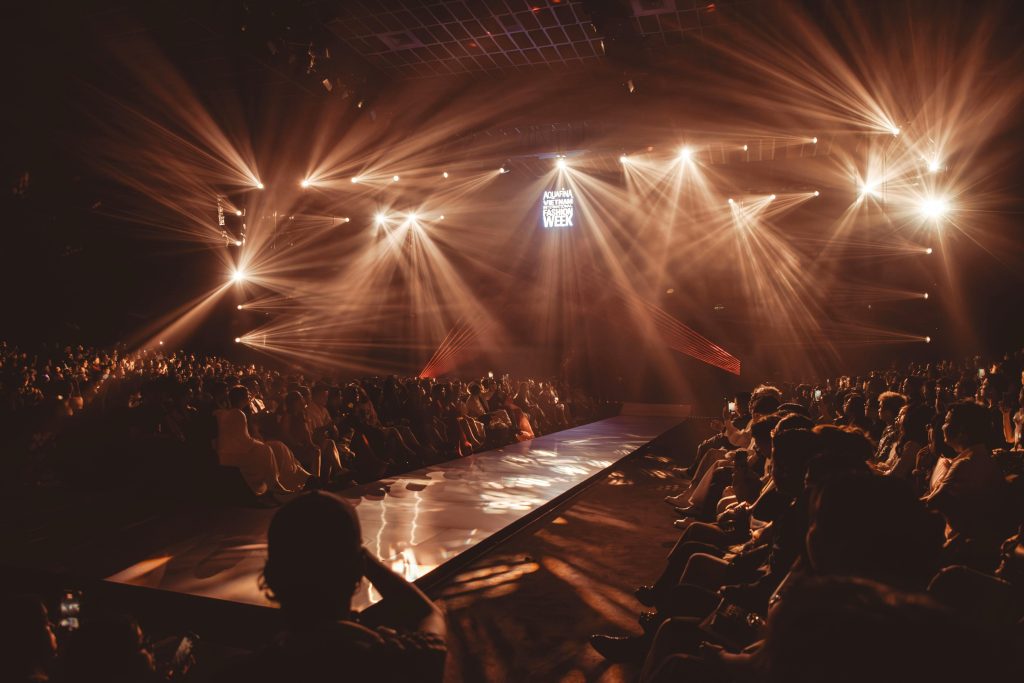



Backstage at Victoria’s Secret, the air is filled with hairspray and nervous energy. A model adjusts her wings one last time, a seamstress makes the final stitch on a crystal-embellished bodysuit, and the creative director checks each look against the run order. In fifteen minutes, the music will start, and months of preparation will culminate in a spectacle for millions. However, this is not just a show, but a carefully planned investment that shapes the direction for the lingerie product range, supplier partnerships, and wholesale contracts worldwide.
In 2026, runway shows and fashion weeks finally became the market’s decision-making center. For wholesalers, brand teams, fabric, trim, and notions suppliers, marketers, and online retailers, each runway look translates into concrete actions: choosing the season’s key colors, adjusting the assortment, signing contracts. To make sense of the formats, it helps to group them into four types: runway shows and fashion weeks (brand image), trade shows (buying), showroom sessions (orders), hybrid (in-person plus streaming).
Victoria’s Secret and a new merchandising language
By 2026, the brand completed its reinvention, begun after a five-year hiatus. Models of different body types, sizes, and ages appeared on the runway, and alongside theatrical wings, sports bras, loungewear, and adaptive lingerie are showcased. In parallel with the main show, B2B sessions take place, where retailers review the collections, place orders, and meet with product teams.
For the lingerie market, what matters is not the wings, but the product mix. When Victoria’s Secret highlights high-rise cuts or a palette of deep emerald and champagne tones, competitors mirror these choices within months. Wholesalers get a trend forecast six to eight months in advance, contacts for lace, hardware and trims suppliers, as well as packaging, and a clear breakdown of the marketing mechanics behind the hype.
Las Vegas as a trading floor behind the casino façade
The “all glitter and showgirls” stereotype shatters on contact with reality. Las Vegas has become the largest wholesale buying hub in North America, where negotiations focus on minimum order quantities (MOQs), delivery timelines, and hands-on quality checks. The city is geographically convenient, has first-class convention infrastructure, and the trade shows fit into the calendar between major fashion weeks.
Key events of 2026: MAGIC (over 4,000 brands, a dedicated sustainable manufacturing zone), Project (next-wave contemporary brands), Agenda (streetwear and action sports). Runway presentations here are more of a draw to the booth than a statement in their own right.
For the city itself, such shows are also beneficial, since they help attract a new audience—fashion lovers. This is more relevant than ever now due to intensified competition between land-based casinos and online casinos. Virtual gambling venues attract players not only with the ability to play from home and at any convenient time, but also with a wide range of bonuses and promotions. At the same time, the signature casino atmosphere hasn’t gone anywhere—live dealer games help recreate it.
The selection of these games today isn’t limited to recreating what you’d find in land-based casinos. According to data from lightningstormgame.org on the live casino game show Lightning Storm, live-hosted game shows are becoming increasingly popular. This is also reflected in the large number of online casinos that offer them.
Overall, virtual platforms have a clear advantage over land-based casinos. As a result, the number of gambling tourists has decreased significantly, and Las Vegas is increasingly focusing on other categories of tourists.
Three fashion weeks, three business objectives
London remains a laboratory. The NEWGEN programme launches the careers of designers who become international names in a couple of years. The spring 2026 shows set the tone for biofabricated materials and fabrics made from agricultural waste. Prices are lower than in Paris, and the environmental requirements for participants are stricter than at any other venue. For a wholesale buyer, it matters less to look at the conceptual runway than at the showroom, where an avant-garde silhouette becomes a wearable product.
Paris sets the luxury standard. Shows take place at the Grand Palais, historic hotels, and temporary pavilions; each venue becomes part of the narrative. The practical value for buyers lies in the “luxury halo,” expertise in fabrics and craftsmanship, as well as influence on color and silhouette. The season’s collections signal soft tailoring, artisanal details, a bright palette of saturated yellow, coral, and green tones, semi-sheer layers.
New York offers the most direct path from runway to order. Here they show pieces you can easily picture on a store rack; the price range is wide, and hybrid formats let overseas buyers view collections in 360°. Among the key themes of the season: premium-level comfort, statement outerwear, “practical luxury,” and a return to classic American sportswear codes.
What to look at first
The runway communicates a PR message, while the showroom reveals the actual SKU matrix and the terms of cooperation. When reviewing collections, priorities include:
- hand feel and fabric quality
- construction and finishing
- fit and size range
- an expanded palette beyond the runway selection
- pricing and minimum order quantities (MOQs)
Before signing off on an order, it is necessary to clarify where production is located, what the lead times and reorder capacity are, and whether there are customization options. The showroom organization itself is a signal: clean line sheets and clear delivery dates signal reliability, while a chaotic presentation raises questions.
The numbers behind the spectacle
The Victoria’s Secret 2025 show drew 78 million streaming views in 48 hours, 2.3 billion impressions on social media, a 340% increase in site traffic, and $47 million in direct sales. A small accessories brand that participated in the show recorded a 600% jump in wholesale inquiries in two weeks.
A trip to New York Fashion Week costs $2,600–$5,550, to Paris $4,040–$8,800, to London $2,900–$6,380, and to the MAGIC trade show in Las Vegas $1,170–$2,380. A buyer case study illustrates the ROI: investing $3,200 in a trip to New York, the buyer discovered a new accessories brand, placed a $15,000 order with 78% full-price sell-through, spotted the ballet-flat trend ahead of competitors, and connected with three new suppliers. The total first-year impact exceeded $25,000, delivering an eightfold return on investment (8x ROI).
Digital access packages to fashion weeks cost $500–$2,000 per season and include streams, virtual showrooms, 360° views, and video meetings. The main limitation is the inability to touch fabrics and reduced networking opportunities. VR experiments in the 2026 season aim to bridge that gap, letting buyers take a “walk” through a 3D showroom.
What to expect from the 2027 season
Sustainability requirements will continue to tighten. Digital showcases will be more fully integrated into buying processes. Brand-image shows and B2B platforms will move closer together, and hybrid formats will strengthen their importance for international buyers, who need to balance cost control with in-person access to the industry.