



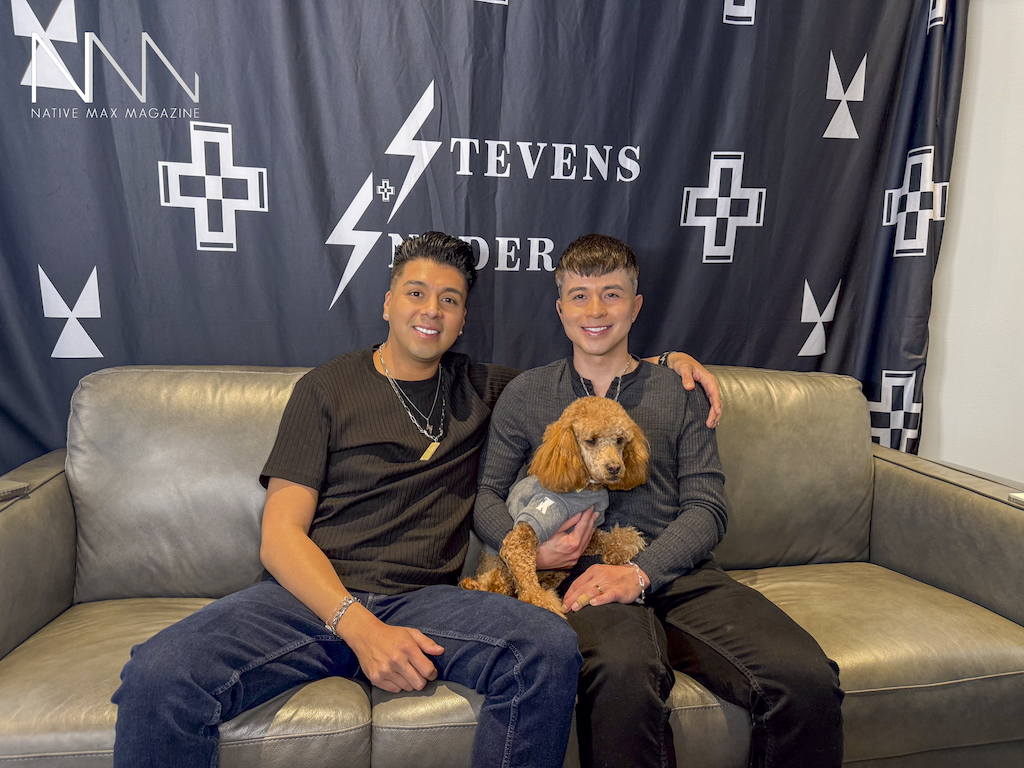
Denver has a complicated relationship with Indigenous visibility. The city sits on land that belonged to the Arapaho, Northern Cheyenne, Oceti Sakowin, Southern Ute, and Ute Mountain Ute peoples among many others, and yet the number of cultural institutions actively making room for Indigenous artists, let alone Indigenous queer artists, remains limited. The recent residency of Adrian Stevens and Sean Snyder at the Denver Art Museum felt, to many in the community, like a step forward. But for Stevens and Snyder, it was never just a professional win. It was personal.
The pair are Two-Spirit, a term used across many Indigenous nations to describe people who hold both masculine and feminine spiritual and social roles. That identity is not separate from their art; it is the foundation of it. We sat down with them in the studio to talk about what visibility really costs, what it looks like, and why making art in 2026 is, for them, always a form of showing up.
Native Max: Do you see your work as protest or preservation? Or both?
Adrian Stevens: I think it’s both. We’ve been able to create new things that look like older items, and being able to create new work that resembles a direction of creativity and expression. It’s a combination.
Sean Snyder: Probably heavy on the activism. We’re a two-spirit couple, and everything we make comes from that perspective, the hands of a two-spirit person, the mindset of an Indigi-queer creative. So it really is a little bit of activism and protest to say, “…we’re here…”
Native Max: Why was it important for you to be visible specifically in Denver right now?
Stevens: We came to the Denver Art Museum during a visit to the Denver March Powwow, and I think that’s when Native Max was actually having a fashion show, we came to support. It actually fell around Sean’s birthday, so we made it a whole thing, and we were walking the halls here, and I was like, “Man, this is like incredible.” We weren’t even full-blown artists at the time. This was like twelve, thirteen years ago, early on in our relationship.
Snyder: It was just part of our early practice; we hadn’t set up our business yet. We hadn’t really established anything.
Stevens: We hadn’t even done Santa Fe Indian Market; this is pre-sweethearts. We were just a regular two-spirit couple having an enjoyable birthday vacation for Sean. We imagined ourselves here, and to know that we’ve come full circle and have dedicated ourselves to art and what it means to create traditional art. To be here is important. I feel like we’re shattering another glass ceiling that can allow our community to follow right behind us.
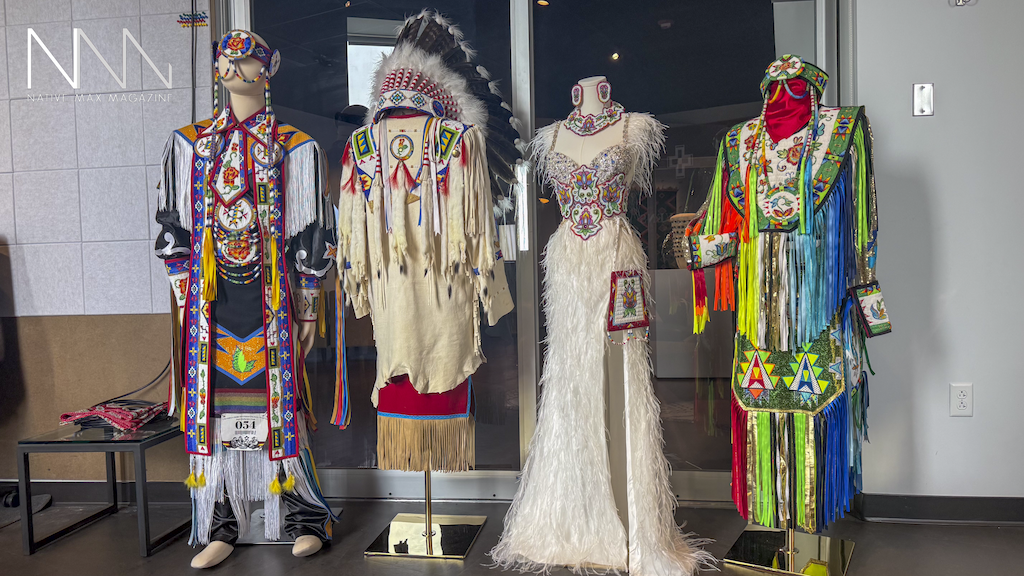
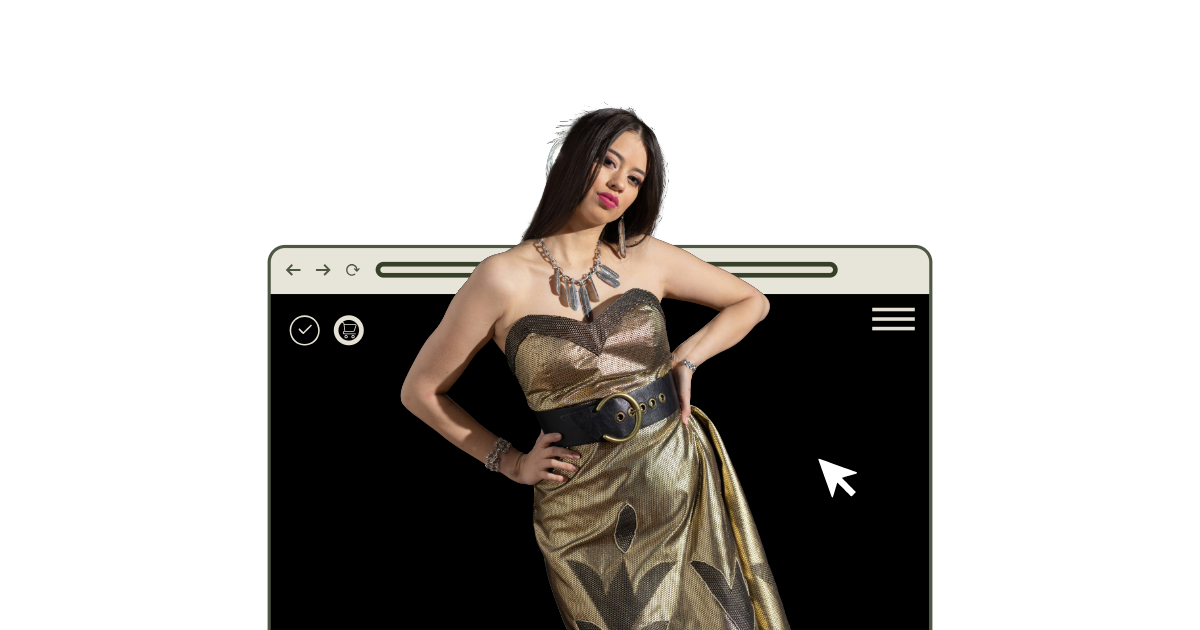
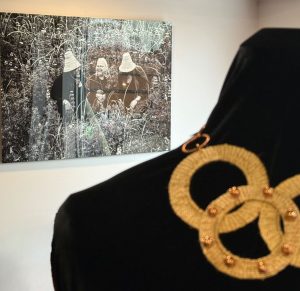
The Plume Woman Debut Dress will be apart of the the DAM installation along with the Ruby Moccasins. Photo: Kelly Holmes.
Native Max: You mentioned the two-spirit community’s role in the history of Native artmaking. Can you speak to that more?
Stevens: What was pretty interesting in our own conversations while being here at the museum and looking at the art that’s on display, some of the old beaded vests and the buckskin, everything from the war shirts to the dresses, Sean and I had this conversation that a lot of our two-spirit community are the ones creating for their families. I don’t second-guess that the hands that created a lot of work that are on display were created by two-spirit relatives within those families. Those are often the ones that are really creating and putting in the labor to make their families look good and represent their tribes and their communities. I have this belief that our two-spirit community is also represented in the art that’s on display.
Native Max: What did the community response during the residency tell you about how that message is landing?
Snyder: The museum experience for us for this residency program has been insanely positive. It’s been such a great moment for us to set up here and have a studio here within the arts and the halls of all of these galleries. To be amongst the art and work here specifically, I wish I could stay until August just to stay in the studio space. The flow has been flowing, and the reception we’ve had on all of our open studio days, just having people come through and ask us questions. We’ve had native youth come by, native elders come by, just to talk about how impactful it is to have us here.
Stevens: We had people in tears, sharing our story and our journey. To me that reminds me that the work that we’re doing and the impact that we’re having is received, it’s understood. I would only feel like we’re doing a good job if that reaction says we did a good job.
Stevens & Snyder’s presence at the Denver Art Museum this month was not incidental, it was intentional. In a city where Indigenous art has too often been displayed without its creators present, they showed up, set up a studio, greeted the artifacts each morning, and let the community find them. That is what visibility looks like when it’s built by hand. Their exhibit opens August 1 at DAM. If institutions like it are paying attention, they’ll be taking notes.