






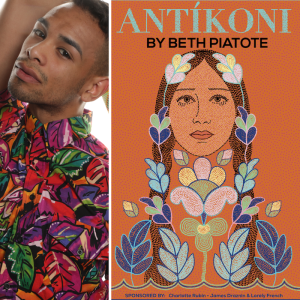
We’ve watched Tai Leclaire’s career since his “Headdress” days, when the Kahnawà:ke-based director and comedian was fresh off Sundance and figuring out how to turn hard conversations into something Native audiences could laugh through. Since then, he’s written on “Rutherford Falls,” played Joseph Gribble on the “King of the Hill” revival, and built a name as one of the sharpest Native voices moving between comedy and commentary.
Now, with 2026 marking the 250th anniversary of the Declaration of Independence, Leclaire is hosting a new PBS-featured documentary that asks a question most 4th of July programming skips entirely: whose independence is actually being celebrated.

The doc opens with the obvious: the fireworks, the barbecues, the flags, and then turns to the one line in the Declaration of Independence that mentions Native people at all, a reference to “merciless Indian savages.” From there, Leclaire traces two and a half centuries of history that rarely make it into a classroom, starting with the Haudenosaunee Confederacy, a participatory democracy dating back to roughly 1142 that some historians argue directly informed the U.S. Constitution, partly through Benjamin Franklin’s documented meetings with Haudenosaunee leaders.
Leclaire, who is Mohawk, walks through how national symbols like Uncle Sam and the bald eagle were built into tools of Manifest Destiny, how the Dawes Act tied citizenship to giving up land and cultural identity, and how Native Americans weren’t granted citizenship nationwide until the Indian Citizenship Act of 1924, decades after fighting and dying in World War I. He also points out that Native people couldn’t legally practice their own religions until the American Indian Religious Freedoms Act in 1978, less than 50 years ago.
Woven throughout is commentary from Dr. Stephanie Fryberg, a professor of psychology at Northwestern University, whose research looks at how language and representation shape perception. Fryberg explains how the “merciless Indian savage” framing functioned as a justification for dispossession, and how it still echoes in how Native people are perceived and taught about today. Her research also found that a striking share of state academic standards only reference Native Americans in a pre-1900 context, reinforcing the idea that Native people belong to the past rather than the present.
The documentary closes on Leclaire’s central question: after 250 years, whose independence are we actually celebrating? It’s a heavy watch for a holiday built on cookouts and fireworks, but it’s exactly the kind of storytelling Leclaire has built his career on, using humor and hard history to make space for a fuller picture.
Watch the full documentary on YouTube.